The Case Against Engineered Stone and What Natural Stone Actually Gives You
- May 31
- 2 min read
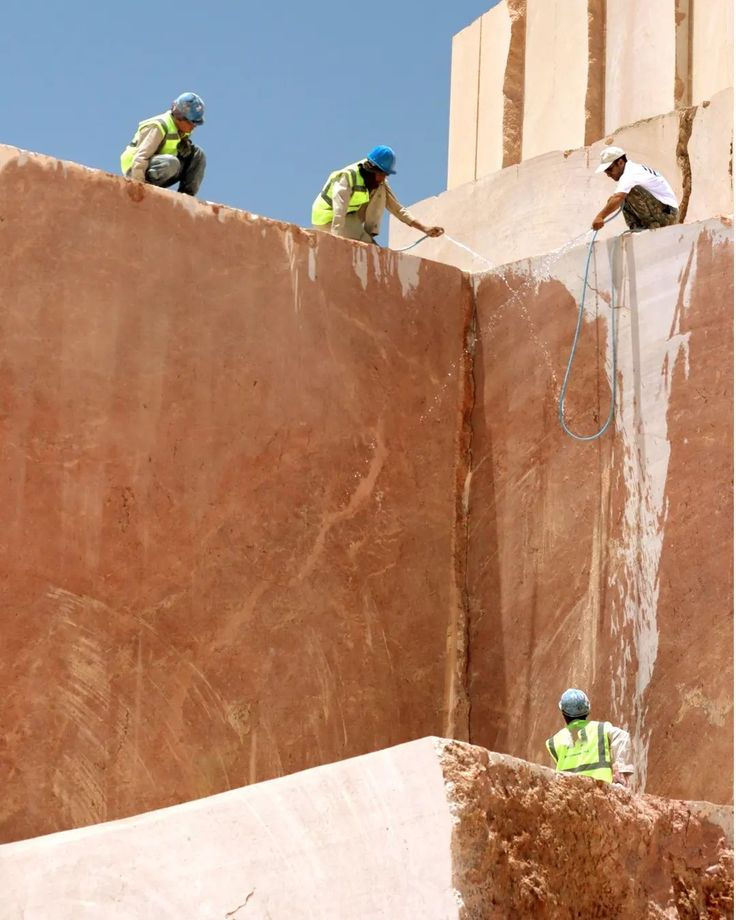
Engineered stone had a very good decade. It was consistent, affordable, and easy to sell. Quartzite-look slabs with zero variation, marble-effect surfaces with sealed pores, countertops that photographed beautifully and asked nothing of you. The industry called it progress. What it actually produced was a generation of interiors that look identical and feel like nothing.
The problem with engineered stone is not that it performs badly. It performs extremely well. That is the issue. Natural stone performs like something alive. Raj green quartzite from Rajasthan carries iron oxide veining that shifts from olive to rust depending on the hour. Kadappa limestone from Andhra Pradesh darkens slightly when a glass of water sweats against it, then lightens again. These are not flaws. They are the material behaving honestly, which is something a resin-bound composite is physically incapable of doing.
There is a particular quality of light that only natural stone holds. A honed Carrara marble surface in morning sun does something diffuse and soft that engineered alternatives have been trying to replicate for years without success. The crystalline structure of real stone scatters light at a microscopic level. No manufacturing process has solved this. You can get close in a photograph. You cannot get close in a room you actually live in.
Durability arguments for engineered surfaces are often overstated as well. A well-sealed natural stone floor, maintained with basic pH-neutral care, lasts generations. The Lodhi Garden complex in Delhi has sandstone that is centuries old and still structurally coherent. Your kitchen counter does not need to outlast a Mughal monument, but the principle holds. What ages with character is almost always preferable to what resists aging by refusing to participate in time at all.
The current resurgence of natural stone in considered Indian interiors is not nostalgia. It is a correction. Designers and homeowners who have spent years in engineered-surface spaces are recognizing a specific absence, a kind of atmospheric flatness that no amount of good furniture or layered lighting fully compensates for. The floor, the countertop, the feature wall - these are not backdrops. They are the room.
At 4 Edges, the recommendation is almost always toward material with provenance. Not because natural stone is fashionable right now but because a surface that carries geological time into your home changes the quality of attention you give a space. That is not a small thing. It is, in many ways, the whole point.
Comments