Why a Single Lamp in the Corner Does More Than a Lit Ceiling
- Jun 4
- 2 min read
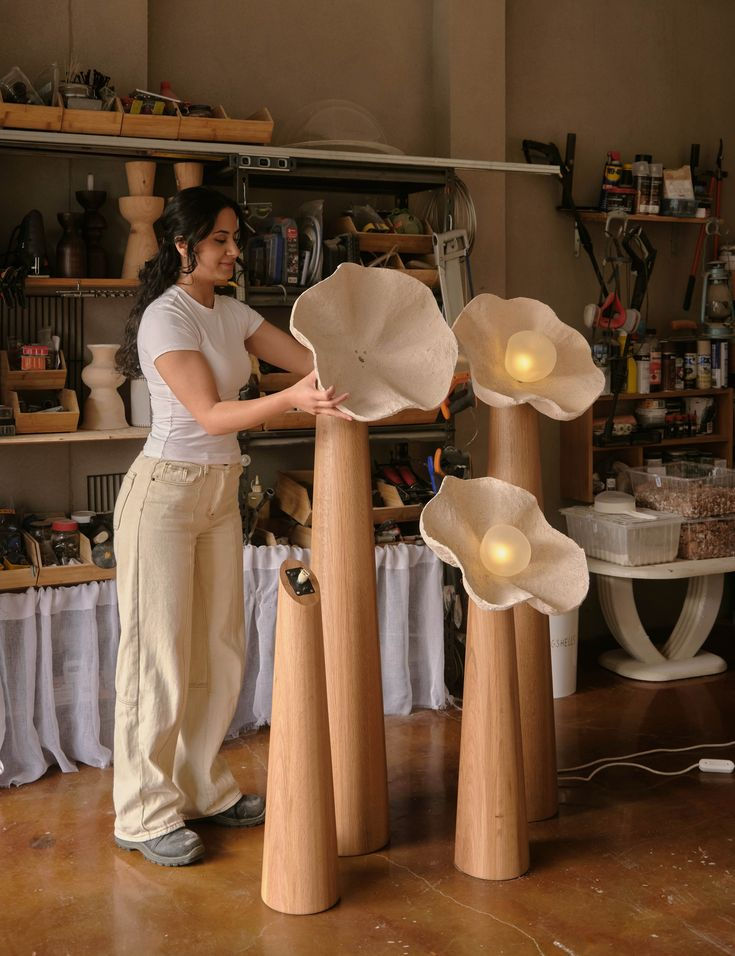
There is a particular quality to a room at seven in the evening when the overhead light is off and a single floor lamp is casting a warm pool across a jute rug and the lower half of a wall. The room feels occupied. It feels chosen. This is not an accident of mood or memory. It is the direct result of lamplight behaving as a material in space, the way marble or linen or raw plaster behaves, with weight and temperature and presence that changes how everything around it reads.
Most urban homes in India are lit from above. A grid of recessed downlights or a central fixture throws even illumination across every surface and leaves nothing in shadow. The room becomes legible but not livable. When you enter a space lit this way, your eyes adjust quickly and your body relaxes very little. There is nowhere for the gaze to settle. Lamplight works differently because it begins at eye level or below, which is where the human body exists. A ceramic table lamp on a side console, a brass floor lamp angled toward a reading chair, a paper shade diffusing soft light in the corner of a bedroom - each of these creates a small world within the larger room.
The material qualities of lamplight are worth taking seriously. A linen shade warms the light and diffuses it. A slim metal shade directs it in a tighter column. An opaque ceramic base draws attention downward and creates contrast above. These decisions are not decorative afterthoughts. They determine whether lamplight in a room feels intimate or theatrical, anchored or floating. The shade, the bulb temperature, the height of the fitting and its relationship to nearby surfaces all compound into something you feel before you consciously notice it.
There is also what lamplight does to the rest of the room by leaving it in partial darkness. Shadow is not emptiness. A wall that sits beyond the reach of a lamp reads as depth. A shelf that falls into low light becomes something suggested rather than displayed. This is how well designed rooms hold interest over time, not by revealing everything but by allowing the eye to move between illuminated and dim, to discover rather than inventory.
One well placed lamp in the corner of a living room will do more for atmosphere than a lighting plan that treats the ceiling as the primary surface. This is not a contrarian idea. It is an observation about how people actually experience space after the sun goes down, when the quality of light becomes inseparable from the quality of the room itself. At 4 Edges, the way a room is lit at eight in the evening is considered as carefully as the plan drawn at the start, because lamplight is not supplementary to a design. It is part of the material of the space.
Comments